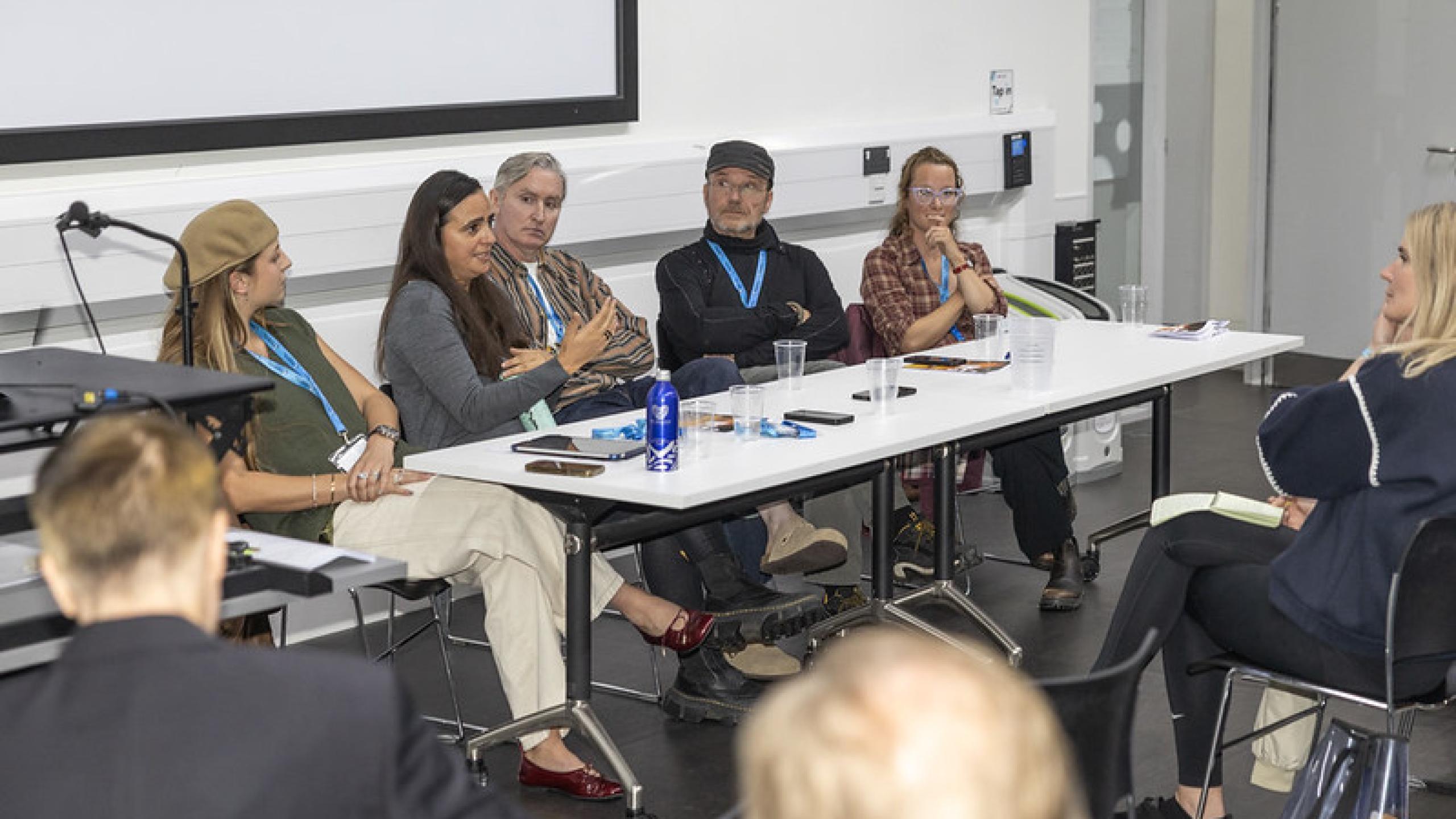
The hour-long discussion brought together Paul Murphy, 1st Assistant Director; Jay Arthur, 1st Assistant Director; Celeste Harper Davis, 3rd Assistant Director and Secretary of the Bectu AD Branch; and Alex Kalymnios, Director. The panel was hosted by Elle Lotherington, Co-Founder of Leading Ladies, AD Guild UK Advisory Board member and 1st AD. The panel explored the realities of working as an Assistant Director, from navigating career progression and negotiating fair rates to maintaining wellbeing and fostering more inclusive working environments.
As part of Bectu’s programme of seminars, workshops, advice sessions and networking opportunities, the AD Guild hosted panel created a valuable space for open conversation about the challenges facing today’s workforce, the relationships that underpin successful productions, and the changes needed to build a more sustainable future for the industry.
Building careers and creating opportunities
The discussion opened with the speakers reflecting on their individual career journeys, exploring how people secure their first opportunities and develop the skills, confidence and professional relationships needed to progress within the Assistant Director department.
With the traditional route from trainee or 3rd AD through to 2nd and 1st AD remains an established pathway, the conversation recognised that there is no single route into the profession. Careers are shaped by a combination of opportunity, experience, perseverance and the relationships built along the way.
The discussion also touched on the persistence of 'imposter syndrome' the feeling that, regardless of experience or seniority, you may not quite belong or may not be doing enough. In a fast-paced, high-pressure environment where AD's are expected to make decisions, manage people and respond quickly to changing circumstances, self-doubt can be difficult to leave at the door.
Alongside career development, the panel highlighted the importance of understanding your professional worth and having the confidence to advocate for yourself. This includes standing firm on appropriate rates of pay, being clear about expectations and communicating individual needs and circumstances.
Working conditions, rates and wellbeing
Working conditions and wellbeing formed another central part of the discussion, with speakers addressing the AD rate card, negotiating rates of pay and the practical pressures that come with working in a demanding production environment.
For freelancers, navigating rates and negotiating pay can be particularly challenging. Maintaining fair and consistent rates requires both an understanding of the value of the role and the confidence to have sometimes difficult conversations with employers and production teams. Open discussion around rates helps build awareness, supports informed negotiations and reinforces the importance of recognising the skills, experience and responsibility that Assistant Directors bring to a production.
With Assistant Directors operating at the heart of production for example, coordinating people, managing schedules and responding to constant practical demands their wellbeing is not simply an individual concern. It is closely connected to the health and effectiveness of the wider production. Creating an environment in which crew members can work safely, feel supported and maintain their wellbeing benefits individuals, teams and productions alike.
Strengthening relationships across departments
The panel also explored the relationship between Assistant Directors and Directors, examining what Directors look for in an AD and how effective collaboration can help bring a production's creative vision to life.
For those less familiar with the department, the speakers outlined the distinct roles and responsibilities within the AD team. While each position carries its own demands, the roles are interconnected, with every member contributing to the smooth, safe and efficient running of the set. We heard from Alex Kalymnios, Director both in the UK and U.S.A on why communication, sound judgement and the ability to anticipate problems before they arise are essential to keeping a production on track. Oh, and how for AD's a little bit of healthy 'earwigging' - listening attentively to what's going on on-set, is crucial!
The discussion highlighted how the relationship between a director and their AD team is built on trust, mutual respect and a shared understanding of the demands of the production. Directors must be able to rely on their ADs to translate creative ambitions into practical plans, manage the realities of the schedule and keep the set moving, while ADs need a clear understanding of the director's priorities and working style.
Diversity, representation and the future of the industry
The conversation also turned to parenthood and the experiences of women working in film and television, including maternity rights, childcare on set and the potential for shared-working arrangements.
For freelancers, navigating parenthood can present particular challenges. Unlike more conventional employment structures, freelance production work can offer limited predictability, making it difficult to plan around childcare, parental leave and returning to work. The pressure to remain available for opportunities can also make it harder for people to step away from work without worrying about the impact on their future prospects. We discussed bringing children on-set, and how the industry can become more progressive around accommodating to parents.
The Bectu AD Branch has been working to address some of these challenges, including developing a maternity rights document to help women working on a freelance basis better understand their rights and the support available to them during maternity leave. Making this information accessible is an important step towards ensuring that people can make informed decisions and feel better equipped to navigate a system that can often be difficult to negotiate.
The discussion also raised broader questions about representation, accessibility and the structural barriers that continue to affect people across the industry. While the panel could not address every diversity challenge within the time available, it reinforced the importance of keeping these conversations active and considering how organisations, employers and production teams can contribute to a fairer and more representative workforce.
Continuing the conversation
Bectu’s Big Autumn Gathering brought together freelancers and industry professionals to discuss the issues affecting film and television, share knowledge and build connections across the sector.
AD Guild UK’s Assistant Directors panel contributed to that wider conversation, creating an opportunity to consider both the practical realities of the AD role and the changes needed to support a more sustainable and inclusive industry.
Thank you to Paul Murphy, Jay Arthur, Celeste Harper Davis and Alex Kalymnios for sharing their perspectives, and for Elle Lotherington for chairing so wonderfully. We are grateful to Bectu for hosting the gathering and providing a space for these important industry conversations.
AD Guild UK remains committed to supporting Assistant Directors, strengthening professional connections and helping ensure that the experiences and needs of the AD community are part of the conversation about the future of film and television.